A few hours ago, just as I’m heading out of town for a week, my Macbook crashes. Nothing but the grey screen of death.
I am now without my computer for at least a week.
I figure rather than get upset I’m going to run a little experiment. I’m only going to use my IPhone.
I will be using only my IPhone for the next week. I will use it for my blogging (writing this post at the airport now), Twitter, e-mail, Facebook, LinkedIn, feedreader, blog comments, web-surfing and more. It will be my only device.
I’m curious to know if the type pad will get me frustrated, especially for longer posts and e-mails. I’m also curious how I’ll feel about the browser speed for surfing and commenting.
I use my IPhone for many of these things now, but mostly in a mobile capacity. It will be interesting to see how I feel after a week of just the IPhone.
I will update you with my thoughts when it’s over and I get my beloved Mac back.
I love the competition innovation brings. You have those who lead the pack and grab share early. Then you have your followers, those who run out and copy the original idea and add their own spin. Then you have your laggards who commoditize the market and drive the prices down.
I’m always curious to what’s going to happen to the innovator. By being first were they able to capture the market or just seed it?
Philips TV launched the flat screen TV but didn’t capture the market.
Apple launched the first real personal computer, but didn’t capture the market.
Friendster launced the Social Media craze but didn’t capture the market
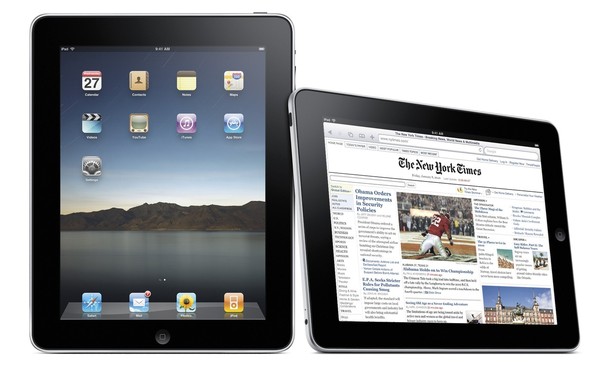
The Kindle launched the ebook reader but won’t capture the market and is about to lose to the IPad
It’s hard to be first AND capture the market.
10 reasons why, despite being first, the Kindle will be relegated to a second tier ebook reader an not capture the market.
Read your blogs without paying- Readers can subscribe to blogs and read them on the IPad with out paying. The Kindle charges to subscribe to blogs
Share – The IPad allows you to share what your reading instantly with apps for Twitter, Facebook, Tumblr, and cut and paste etc. Sharing is huge
E-mail – Beyond the sharing capabilities email provides, readers can access other tools of their day in a single device
Social Media – The IPad will allow users to stay connected and engaged with their friends
The apps - There are over 140,000 applications users will be able to use on the IPad. This increases the utility of the device 10 fold
Internet access - The IPad allows you to search the web with a fully functional browser. Links provided in the reading come to life instantly. You can access your online newspaper subscriptions and more without additional cost
Movies – You can watch movies on it. (that’s all I need to say about that)
Pictures – The IPad is a killer photo album
Listen to music – I like to listen to music when I read.
Bonus Reason - there is a Kindle app for the IPad, therefore you can buy your books from Amazon, and access any books you’ve already purchased as a current Kindle user. The Kindle is in the IPad.
The Amazon Kindle seeded the ebook market, but like many before them, they won’t own the space. I guess you could call them Amazon “Apple” seed.
In Ancient China Confucius praised filial piety; the dutiful attention to the needs of ones family elders, especially parents and grandparents.
The Han Dynasty (200 BC-200 AD) took filial piety to a new level. Those who had the greatest reputations for filial piety were awarded choice government appointments. To gain a reputation worthy of such appointments men would perform exaggerated acts, such as refusing to end their mourning of their parents. Getting to the court of Han and getting a job of stature meant performing the virtues of filial piety at tremendous heights and this is exactly what the men of Han did.
The Han dynasty rewarded filial piety and that’s what they got.
Sales is no different. You get exactly what you reward for. The problem is most organizations don’t reward the actions they want.
Companies offer commissions, or “choice appointments” but they don’t align. They pay commissions on sales to all customers, when what they need are new customers. The result; no new customer sales. They pay the same commissions on all products when they’ve just launched a new product. The result; no new product sales.
Sales people follow the money. They are not going to read between the lines. They will move in the direction of reward.
What are you trying to sell? How do you want people to act?
Rewards and commissions are how you ask people to do things. Reward the behaviors that are important. Commission the things you want the team to sell.
You will get exactly what you ask for whether it’s what you want or not.
A reader asked; “How would you approach selling new Toyota’s given the recent news?”
What a great question. When companies are hit with recalls, and defective products that put peoples lives at risk, selling is the last thing most folks are thinking about. Yet, the selling must go on.
Think Tylenol, the Ford Escape and Firestone Tires.
Despite the news, and the hysteria, Toyota dealership are still open, and the sales guys still have a quota.
Understanding this, how do you sell a Toyota in this environment?
A couple of my suggestions:
Educate – share the facts with prospects, break the problem down to exactly what it is, how often it happened, what Toyota is doing to fix it, how it’s been addressed with newer models and therefore not a problem, etc. Give your prospects as much information as possible. Don’t hold back. The more info they have, the less the risk will appear.
Other models- remember Toyota has a fleet of brands that are not defective and have incredible resale value, and are extremely reliable. Remind your prospects why Toyota has become the number one car company in the world
Embrace fans – despite the negative press, Toyota has a huge following and fan base. Reach out to your fan base and offer special incentives for them to buy or thank them for being owners. Give them free oil changes, discounts on required maintenance, etc. Pull-out all the stops with your fans. They will sell for you.
Don’t over react – a number of people won’t buy a Toyota today because of the news. But a lot of people will and are. People still buy Fords, Firestone still sells tires and Tylenol is still given out by hospitals. Treat it as business as usual, with the news being just one more objection to overcome. Just don’t make it more than it needs to be.
Selling a Toyota is going to be harder, but it’s not going to be impossible. Be open with the information, remember what makes Toyota good, listen to your prospects, reward your loyal fans, and don’t over react. The sales will come.
What do you guys think? How would you sell a Toyota today?
Gone skiing. This blog will be closed today. All comments and pearls of wisdom will be returned tomorrow. Sorry for any inconveniences this may cause. It’s snowing in Vail!
Glen Plake is a free spirit. He is a guy who has been changing the world of skiing from the inside out. He’s done it, not by winning gold medals, or Winter X games, but by traveling from ski hill to ski hill hanging out with the people that make them run; not the CEO’s, but the dishwashers, and the busboys; the best skiers on the hill that no one knows about.
I remember watching his first big movie; Greg Stumps, Blizzard of Ahhs! It was in stark contrast to the mainstream, conventional ski videos by Warren Miller. They pushed the limits. They were rough, no frills, extreme skiing movies, that got to the raw essence of what its like to strap two wooden boards to your feet and ski the ungroomed, untamed, natural terrain provided by mother nature.
The Glen Plakes of the world force us to remember what it is we do and why we do it. They don’t allow the conventional to anchor us in the mundane. They push the envelope and challenge what we accept as the norm. They remind us that it’s the dishwashers; not those in the big offices that make our world run and in many cases they know a lot more about our business than we do.
Is there a Glen Plake in the world of business? I can think of a few, but I think there need to be more. They keep us honest and this is exactly the kind of leadership we need.
Many of you know I am a big fan of enterprise micro-blogging. Think Twitter for your company. It is by far the most efficient way to share information, exchange ideas, collaborate and engage people in your company. Enterprise micro-blogging tools make companies more agile and improve performance because they capture the invisible.
Salesforce.com is going to launch their own micro-blogging tool called Chatter (now in private beta.) Chatter will compete with Socialcast, Yammer, Socialtext and all the other microblogging tools out there today. It’s a crowded space, but they will have an advantage because of it’s integration into their Salesforce.com platform.
Chatter provides all the typical features you would expect from traditional micro-blogging tools. You can create groups, follow the people most interesting to you, filter feeds to easily find things that are important, respond to specific users directly, share documents and links and more.
But, Chatter also has a few unique features. The most interesting is, unlike Yammer, Socialcast and other pure play micro-blogging tools, Chatter gives you a home page where all of your Salesforce data and important information is laid out for you to monitor. Think of it like a business application dashboard. Another unique Chatter feature is the profile page. The Chatter profile page appears more informative than Yammer and Socialcast from what I can tell. It provides your experience, skills and other personal information so others in the organization know who you are and what you do. It has more of a Facebook profile feel.
Another unique feature Chatter has is its ability to allow you to follow a document. I like this feature a lot. You can follow a PowerPoint presentation, a spreadsheet, a word doc. anything. I like this feature because it makes updating, and managing versions super easy. It also allows you to see what others think of the information and make corrections on the fly. Beyond documents and people, Chatter allows you to follow other applications, including non-Salesforce.com applications.
Chatter also gives you the ability to bring information in from outside social networks like Twitter. The value here is you can create a Twitter search for a specific company or customer and anytime time that company or customer is mentioned on Twitter, everyone in your Chatter group can see it. This is a powerful way to manage a customer and stay ahead of the competition.
One question I do have about Chatter that concerns me is integrating an entire organization. Traditionally, only sales, and marketing and the executives use Salesforce.com If Salesforce wants it to be a ubiquitous tool for the entire company they will have to create licensing pricing that makes it worth it to have everyone in the company to use it; including those who normally don’t use Salesforce, like product, finance and HR. The real value in micro-blogging comes from connecting the entire organization. Not just a few functional groups.
If you are a Salesforce.com customer, Chatter is a compelling tool to bring your organization together. If used appropriately, it has the ability to create proposals faster, identify useful information faster, improve customers relationships, increase sales, accelerate product development and more.
Whether it’s Chatter, Socialcast, Yammer, Socialtext or any other micro-blogging tool, your organization will benefit from their use. Find one and use it. They are about more than chattering, yammering or twittering, they are about getting business done.
Do u think Apple will offer the Kindle app for the IPad?
Bijan
No idea but I hope so
Me
It would create an intersting dynamic. Having two book reading
options. One that makes you money and one that doesn’t.
It would get me to buy the IPad for sure. I would all but abandon my
Kindle.
Being able to play on both devices would be a boon for Amazon.
This got me thinking.
If Apple allows the Kindle App on the IPad, it could canniblize their own book store revenue. For Kindle readers, there is little reason to buy from the Apple book store. However, it is a great reason to buy an IPad. IPad’s are far superior devices than the Kindle. If I can leverage my Kindle account on an IPad, it would be no brainer to switch.
Apple has an interesting dilemma. Risk losing some book revenue and lower the barrier to adoption for existing and potential Kindle users or draw a line in the sand; have a monopoly on bookstore revenue but sell fewer IPads. I think Apple will be better served by offering the Kindle app. Mostly because, they should want as many people on their device as possible. Secondly, because Apple and Amazon will each be lacking titles. Users will go to both stores to find the titles they want. The bookstore revenue loss may not be that material.
Amazon is in a bit of a different situation. They run the risk of the Kindle device becoming completely obsolete. If Amazon offers the Kindle app on the IPad, they in essence remove any value or need to buy a Kindle. If Amazon offers the Kindle app for the IPad the deliberation between buying a Kindle or an IPad becomes fruitless. The IPad wins. You can simply buy any of the Amazon titles the Kindle offers on the IPad, as well as have access to the Apple bookstore, email, the web, your music, pictures etc. Game over, no contest, case closed, the Kindle just isn’t the device the IPad is.
If I’m Amazon, I put the app on the IPad. I’m not going to play the hardware game. Hardware margins traditionally suck. Hardware is a vehicle to higher margin sales. I suspect this is/was the case for the Kindle. It was created to drive more book sales. If I’m Amazon, I’m going to keep this focus on getting people to buy books from me and let Apple make the device. This is what Amazon does best. They know the online retail space better than anyone. They need to compete on their own turf, where they can win. Competing with Apple on hardware is not a good fight.
If Apple wants to sell more devices, which is where they play best, they need to offer the Kindle app on the IPad. It will kill the Kindle. If they want to be the next Amazon, they shouldn’t. I don’t want to know why they would want to be Amazon.
If Amazon wants to sell more books, they should offer the Kindle app on the IPad. It will get them more book sales. If they want to sell more Kindles, they shouldn’t, but can they be an Apple with the Kindle? I say no.
The Kindle (app) needs to kill the Kindle (device), it is best for everyone.
“Building a solid content creation engine is critical to B2B marketers today. Why?
Its the content that gives you the opportunity to have a discussion with the Media, its the content that gives you the opportunity to create conversations socially, its the content that gives you the opportunity to re-engage with leads in your system that you may be nurturing on that sames topic, and its the content that allows your sales team to start a conversation with their accounts about that topic.”
Paul is right with this. Content creates the engagement. It’s what connects us to our customers and prospects. Content creates the conversations.
To do this I think B2B marketers and companies need to go a step further. Context needs to be provided.
Content has never been a problem for B2B marketers. Chucking case studies, creating collateral, static websites, etc. have all been part of B2B marketing’s bag of tricks. What they haven’t done well is create context for the content.
Creating context is about providing information in a manner that people can use it. Providing information in a way that creates value. Call it “free” information.
A while back I posted how my favorite ski resort, Vail was missing a huge opportunity with it’s ski school. They provide information, but it has little context for visitors.
Dunay is right. Create a content creation engine. But, don’t stop there. Make it valuable. Give it utility. Create content people and companies can actually use and benefit from. That’s creating a content engine with context.