Keenan 411

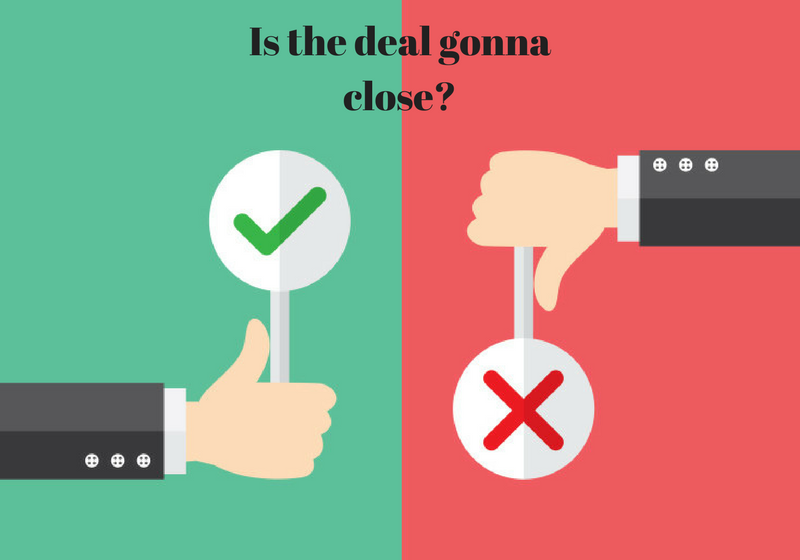
How to Build an Accurate Sales Forecast

I gave my two cents earlier this week on why sales and earnings forecasts fail.   They fail because of lack culture NOT because of lack of smarts.

Chris Waldron called out culture in his comment on the post.  I think Chris is right.

There are only 3 things needed to build an accurate forecast; data, interpretation and culture.  That’s it.

If building an accurate forecast is important to your business, start with building a culture of reality.  Reality is at the core.  An organization that confronts reality accepts what the information is telling them and plans accordingly.  There is no King James bible interpretation going on.  Their is no discarding of the data because someone doesn’t like it. It is what it is.  If the data is telling you business is going to slide, accept it, build an accurate forecast around it, figure out away to minimize and move on.

If forecasting is an exercise to support a predetermined number, it’s not forecasting and a culture of reality doesn’t exist.  Don’t waste anyones time, just give out the numbers and move on.

A culture of reality is critical to accurate forecasting.  Allowing the organization to accurately interpret the data to arrive at the most accurate representation of future revenue is key.

That brings us to the data.  I’m a gut guy, so this is hard for me.  However, I accept it and dig in.  An accurate forecast needs data.  It needs:

  1. Historical information
  2. Editorial dialog
  3. Customer data
  4. Competitive data
  5. Trend analysis
  6. Industry analysis
  7. Company data:
    1. Support analysis
    2. resource availability
    3. Product availability
    4. New product development
    5. New product availability
    6. Marketing plans
    7. Customer satisfaction
    8. etc
  8. Expected Macro Economic Data
    1. Consumer Spending
    2. GDP Growth
    3. Consumer Confidence
    4. Interest Rates
    5. Inflation
    6. Housing prices
    7. Government regulations/intervention
    8. etc

All of this info and more can influence the numbers.  Building a forecast without all the data, internal and external, marco and micro is a hollow effort.

Use the data, it’s the foundation.

If the culture is there and the data is there, interpretation is the special sauce.  It’s what differentiates the professionals from the amateurs.  Interpreting the data to create an accurate forecast is an art.  There is no science to it.  The best people I’ve ever seen can look at the data and with an amazing accuracy determine the impact to the forecast from the data.   It’s a little bit experience, it’s good data, it’s knowledge of their world and it’s a little bit gut.

I purposely chose not to be perscriptive in this post, because I don’t think forecasting is all that hard.  It’s only hard when the culture allowing for good ones doesn’t exist.  Build a culture of reality, get good data and learn to interpret it.  The forecast will come out fine — and by that I mean ACCURATE!

Enhanced by Zemanta

When It’s Time for a Startup to Hire a Sales Guy (Gal)

Hiring a professional sales person can be a stressful event for a start up.  Hire too early and waste lots of money on a sales person who is unable to drive any revenue, hire too late and risk leaving money on the table or worse losing to the competition.

To figure out if a start-up is ready for a sales person or team depends on 3 simple questions.

1)   Is the product or service ready for prime time, can it create a market or can it create demand for itself?

2)   Is there market demand?  Does the market want the product or service?

3)   Does the organization have the sales expertise to execute on the above?

Determining if it’s time to hire a sales person or team is a simple if/then.

If the product is ready and can create demand for itself and you don’t have the sales expertise, It’s time to hire sales.

If the market demand is there, if the market wants what you sell and you don’t have the expertise in house, then it’s time to hire sales.

If there is market demand AND the product or service is ready for prime time and can create demand for itself, then hire a shit load of sales people and fast.

If the product is not ready for primetime yet there is market demand then try to develop the expertise in house, use the CEO, founders etc.  It’s a business development process until the product is ready.

If the product is ready and can create demand for itself, but the market demand isn’t there then hire a REALLY, REALLY good Maverick.

If the product or service isn’t there, and the market doesn’t know it wants your product or service yet then don’t hire anyone.  Get the product out the door.

There are only 3 things that can sell a product or service, the product itself, market demand or sales.  That’s it.   Nothing else can move the needle.

To determine if its time to hire a sales person figure out what if/then statement fits, then go.

Enhanced by Zemanta

It Happens with Chemistry

Sales teams have an energy or chemistry.  Like a sports team that is on an amazing run or the one with all the talent that keeps loosing, sales teams win or lose based on chemistry.

Talent, structure, leadership, attitude, environment all come together to create the sales team chemistry.  Sales teams with great chemistry win, those with terrible chemistry lose.

Sales is both an individual “sport” and a team “sport.”   Sales people feed off of one another.  They talk, they borrow each others ideas, they move together like a school of fish.  When the chemistry is bad, the team won’t perform, despite the talent or product.

When the sales team isn’t sharing information, when they are fighting with product and engineering, when they aren’t connected with marketing, when they are creating silos and an “us, them” environment the chemistry is NOT good.

Sales team chemistry is a leadership problem.  The old school sales culture often times contributes to poor chemistry.

Sales teams that crush it, have great chemistry, there is a confidence in the company, the products, and leadership.  A trust exists.  Creativity rules the day, difficult problems are overcome, customers are happy, and revenue is growing.

If a sales team isn’t making its numbers look at chemistry.   If a sales team IS making it’s numbers look at chemistry.  Like sports teams, winning in sales flows through chemistry.

What is the chemistry of your sales team?

4 Keys to Proactive Sales Management

I see this far too often.  Sales managers and sales leaders reactively manage their people.  They reactively manage because they to manage to results.  Results are a trailing indicator in sales. If you manage to results your too late.

It’s a common approach in sales.  The sales rep misses quota.  The manager says that’s not good, don’t miss quota again.  The rep misses quota again, the manager puts him on a PIP (performance improvement plan), which in essence lays out goals the rep must meet in the next 30 to 60 days or be fired.  In the less agressive scenerios like this, the manager works with the rep to figure out what is wrong but even then it’s still being reactive.

I have always felt this is a bad way to manage and lead sales teams, yet it has staying power and seems to be the course of action for most organziations.

Being reactive does little for anyone.  The key is to be proactive.  Like most things in life getting ahead of the problems or preventing them entirely is far better than trying to fix them.  The key is find the leading indicators of failure.

To find the leading indicators I break down sales management into 4 integrated categories; planning, execution, results and talent.

Failure and poor performance can and will be seen early in any and all of these categories.  They are a barometer for failure or success.

If a poor plan is put in place, failure is imminent even if it’s executed well by a talented sales person. – Manage the plan.

If a great plan is in place but is executed poorly by a talented person, failure is just around the corner. – Manage execution.

If the sales person lacks the skill or talent a good plan won’t make a difference. – Manage talent

If it’s a poor plan, executed poorly by someone with out the talent you’re screwed. – Manage all three.

If it’s a great plan, executed brilliantly, by a talented sales rep and the results aren’t there, you’ve messed up somewhere. – See 1, 2, or 3.  The problem is there.

Proactive management requires a process that embraces and monitors all the critical elements to sales delivery.

My management process works like this;

1) Everyone on my team builds a yearly plan.  They share it with the entire team, peers and all.  We cut it up, attack it, challenge it, and rework it until its a solid plan.  Plans go through a rigorous evaluation process to ensure they’re sound.

2) I focus on execution.  Plans are reviewed every quarter asking the following questions: what did you say you would do, what did you do, what did you learn, what are you going to do next quarter.  The process ensures proper execution by evaluating WHAT a rep is doing and HOW they are executing to the plan.  This allows problems to be identified early and changes made on the front end.

3) I hire for talent, and coach.  The most important aspect of proactive management is talent.  I hire for talent and I coach them.  I have standing one on one meetings every 6 weeks with all of my direct reports.  During these sessions we talk about what they do well, what they need to improve on and what they need to stop doing.  These are not performance reviews.  They are coaching sessions, designed to help them grow as a sales person and as a leader.

A process that embraces all of these elements is proactive.  Problems are seen early and symptoms are separated from root cause.

Getting poor results with proactive management is almost impossible.  You see it coming long before the boat sinks.  It gives you time to course correct, limit the damage or turn things around.

If your results aren’t there, if the numbers are off, if quota is in jeopardy it’s one of 3 things; a bad plan, poor execution or lack of talent.  Quick can you tell me which it is?  How do you know?

Enhanced by Zemanta

Leadership Development Isnt A Budget Item

Leadership development isn’t a budget item or a checklist, it’s a culture.

Wally Bock had a great post about this Wall Street Journal Article; Leadership Training Gains Urgency Amid Stronger Economy In it Wally compares creating urgency for developing leaders to someone planting tomato seeds at 4:00 in order to have tomatoes for dinner at 6:00. It just ain’t going to happen.

Leadership development takes time. You can’t just make it happen.

I have held “leadership” positions with at least 5 different companies. Not once during the interview did someone ask me what my leadership style was. Never was I grilled on how I develop people. Never once did anyone inquire about my leadership tools. None of the companies shared with me their definition of leadership and the required leadership skills they expect in their leaders. In only a few cases was their any discussion of leadership at all. I believe this is prevalent because most companies treat leadership development like a checkbox.

Most of my interviews have instead centered around my industry expertise, my knowledge of the products, the customers, and my contacts.

Most companies look at leadership development as a check box or budget item. They budget for leadership training, throw it over to HR and send folks to random training courses and declare their commitment to leadership.

Unfortunately it doesn’t work this way.

Leadership development isn’t a budget line item or training courses but a culture.

Companies with a leadership culture do the following:

1) Define leadership for the entire company
2) Have stated leadership behaviors and expectations
3) Create leadership identification programs based on their definition of leadership and their expected leadership behaviors
4) Hire and promote based on leadership first and knowledge (product, industry, company, customer) second.
5) Evaluate all managers on their succession plans and track record for developing leaders.
6) Continually create new leadership tools and methodologies
7) Have flexible environments allowing budding leaders to easily move throughout the organization, preventing pigeonholing and dead end positions.
8 ) Have reward and recognition programs celebrating the right leadership behaviors.
9) Provide on going leadership training an development
10) Have mentor programs

Most of things on this list don’t cost a dime. They are absolutely free.  Yet, few companies embrace them.

Because a strong leadership culture costs very little it’s recession proof.   Yes the training costs money, but it doesn’t cost anything to provide mentors.  It doesn’t cost anything to have a leadership identification program.   Real leadership programs, the ones that don’t focus on the training checkbox, don’t have to worry about hard times on the horizon.  They’re ready, with the leadership poised to tackle the challenge.

Take leadership development out of the list category and put it into the culture category.   Define it, hire for it, fire for it, reward for it, promote for it, and get out of the way.

You can’t create a leaders overnight.

Enhanced by Zemanta

Coaching Matters

Last week I posted my thoughts on people who are coachable.  My take, it’s the most important trait you can hire for.  You can see the post here.

One of the most interesting things about the post was a comment left by David Brock CEO and Founder of Partners in Excellence, a sales consulting firm.  David made the point that just as important to finding good coachable people, was making sure those people had coaches.

. . . Great managers need to both coach and be coachable.

We do face a real challenge, hiring people that are coachable is great, but they need to get the right coaching. Too few managers invest the time in coaching or coach effectively.

While the data is a few years old, we did a survey of several 100 sales managers a few year ago. One question was, “How frequently do you coach each sales person?” The response astounded us, 68% coached their sales people once a quarter or less.

Managers don’t understand coaching and don’t integrate coaching into the fabric of the business. To drive high performance, it’s critical to have coachable people, but it’s as critical to coach them!

David makes a great point.  To hire coachable people and then not coach them is not only inefficient, but foolish.  We need to coach the coachable.

My management style is to coach.  Some people like it and others can’t stand it.  To me a coaches job is to bring people along.  It is to get as much out of them as possible.  Coaching is about providing people the support, feedback, and honesty that will allow them to grow and be the best they can possible be.  Not everyone likes to be coached as they don’t like to be told they aren’t good at something, or that they need to improve.  A lot of people don’t like the openness and exposure that comes with coaching.

It’s because of this, coaching is hard.  Coaching takes an investment in people, management doesn’t.  Management isn’t an investment in people, it’s an investment in process, goals, and delivery.  People are just another resource to be managed.   This can work in the short-term, but not in the long-term.

Coaching is an investment people.  To be a coach takes time, commitment and understanding.  Coaching requires an understanding of the person as a person, what their motives are, their career aspirations, their strengths and weaknesses, their capabilities, their learning style, their personality, and more.  Coaching embraces the individual not the resource.

I like this part of leadership.  I get motivated and inspired by watching others reach their goals, grow as individuals and achieve greatness.  Because of this, I coach.

I invest in the people that work for me.  I challenge them to set higher goals.  I look to understand who they are and how they tick.  I want to know why they do what they do everyday, how they do it, what they want to do next, what causes them anxiety, what is a breeze, what they use as a crutch and what they avoid.   It all helps me to be a better coach.  I look to coach my people every chance I get.  Like David said, it’s not a quarterly effort, but should be an ongoing process.  Coaching happens throughout the days, weeks, and months.  Coaching is situationally driven.  Coaching is about capitalizing on situations.  Coaching requires being on the lookout  to provide opportunities for growth or improvement.  Good coaches provide support when the opportunities appear, not at some regularly scheduled time.

I like what David said.  He’s right.  Hiring coachable people is only half of the effort.  Coaching them is the other half.  Hire coaches and hire coachable people and then coach them.  It makes all the difference in the world.

Enhanced by Zemanta

Results Needed, Immediately

Immediate results don’t happen.  If they do, they are rarely meaningful.   It takes time to create meaningful results.  Yet, in times of crisis the cry for immediate results comes fast and furious.  The push happens.  The threats rise.  The rallying cry is sounded.  By carrot or stick the expectation of immediate results is created.

The problem is, results aren’t immediate.   Results are the sum of effort, decisions, failure, commitment, focus, drive, partnerships, discussions, analysis, and most important time.

Looking for immediate results will get you results, but meaningful results, that’s a different story.

Coachability

Everyone has their own philosophy on hiring and what they determine to be the key skills in an employee.  The one that is most important to me is coachability.

Coachability is how flexible someone is.  It’s how well they respond to criticism, critique, new ways of doing things, and fresh ideas.   Coachability is a persons ability to grow through others leadership, direction, and insight.

Only 50% of sales people met their quota in 2009.  (source: Bridge Group’s 2010 inside sales metrics survey) I have to believe that many non sales people also missed their objectives and goals in 09.  I’m sure some of this can be attributed to the economy, but I also believe much of it is a leadership and people issue.

The only way to turn around an underperforming company, team or organization is through the people.  We only have two options when it comes to people; get new ones, or bring up the existing.   I prefer the second and that’s why I put so much emphasis on finding and hiring coachable people.

Coachable people embrace new ideas.  They are open and actively seek out criticism and critique.  They are often focused on personal development and growth.   Coachable people tend to be more secure.  They are less attached to the status-quo and see change as necessary and good.

Relationships with coachable employees are different too.  They are rooted in discussion, assessment and evaluation.  Relationships with coachable people are less hierarchical in nature.  I’ve found them to look and feel more like partners rather than supervisor, subordinate.   I’ve found when managing less coachable empolyees the conversations tend to be more combative, data driven, and defensive, as less coachable employees are very sensitive to criticism, and change.  They are often insecure and look to defend their position rather than explore new opportunities for growth.  Less coachable relationships are more hierarchical.  They are more top down.   I find it hard to work with less coachable people.

Coachabilty is a softskill.  It’s hard to measure.   But I know it when I see it.  Coachability is at the core of change.  It is at the core of growth.  It is at the core of personal interaction.  It is critical to development.   Coachable people bring a flexibility and openness to situations that enhances success.  I like to look at it like being a coach for a tennis or golf pro.  Imagine how difficult it would be to get Andre Agassi or Tiger Woods to win if they weren’t coachable.  Imagine every time you suggested a change in Tiger’s swing he argued or pushed back.  Imagine letting Andre know his performance in the first round of Wimbledon was awful and that he wasn’t playing well, and he’d complain to “HR”.

The coachable get that being pushed, challenged, and coached is the key to their success.  They actively seek it out and surround themselves with coaches that don’t let them get complacent.  I believe the same thing holds true in the business world.

There are a lot of brilliant, talented, experienced, people out there.  People with amazing skills who can get things done.  But for me, more important than experience, talent, and brilliance is their ability to adapt and grow and the coachable are far more capable of growing and adapting.

Business changes faster than it ever did.  Companies are no longer entitled to a 100 year span on top.  Microsoft, less than 30 years old is now loosing to Apple.  Google, only 10 years old is being challenged by Facebook.   Adaptability is the new success trait.   To be adaptable you have to be flexible and a team of coachable engineers, sales people, product people, marketers and more is at the core of that flexibility.

For me, hiring coachable people has been the difference between success and failure.   What do you think?

Enhanced by Zemanta

Order Takers vs Order Makers

In sales there are order takers and order makers.

Order takers are reactive.   They listen and respond to customers requests.  They respond to RFP’s.  They give the customer what they ask for.  Order takers sell in the now.  They focus on what can bought today.  Most sales people are this way.  Order takers don’t realize they are order takers.  They see themselves as being responsive to the customer.   Order takers defend their selling style by using the customer.  They say it’s what the customer wants.  It’s what the customer is asking for.  The problem with this is, they are not comfortable pushing the customer, or making the customer uncomfortable.  Order takers don’t like to disrupt the apple cart.  Order takers are insecure.   Fear is a constant theme. They operate from what the customer wants.  Despite this, order takers are very good at what they do; taking orders.   They are an advocate for the customer and what the customer demands.  Order takers are controled by the customer.  The customer drives order takers.  Where the customer goes, the order taker is not far behind with their order pad.

Order makers are remarkably different.  They aren’t focused on what the customer asks.  They focus on what the customer needs.   Order makers are comfortable making their customers uncomfortable.   They are secure. Order makers are proactive.  They are not driven by the products in their bag or requests by the customer.   Order makers have conversations.   They engage customers in business discussions regardless of a solution or product.  Order makers measure themselves not only by quota but by customer ROI and business impact.   Order makers sell 6 to 9 months in advance.  They are looking down the road.  Order makers aren’t controlled by the customer.  Order makers control the customer.  Order makers are driven by data, by the market, by the industry, by their customers strategic goals.  Order makers are invaluable to product and the rest of the business, as they provide visibility to where their customers are going, not where they are.   Order makers are provocative.   Order makers don’t have order pads, they know they have the sale long before the customer is ready to order.

There is a big difference between an order taker and an order maker.  Order makers are indispensable to their customers and to their company.  Order takers take orders and when the orders dry up . . . you hope you have an order maker.

Enhanced by Zemanta

“Why?” a Tool or a Weapon

There has been a lot of discussion around the power of the question “Why?” lately.  I’m not sure why, (no pun intended), but maybe it’s because of the new book  Start with Why and the TED video by Simon Sinek, but “Why?” seems to be showing up a lot lately.

Generally I agree with the power of why, for so many reasons.  I’ve written about the importance of “why” in selling here a lot.

As someone who uses “why” a lot, I  love it as a tool.  It allows me or others to get to the root of things.  It allows for magic to happen as more information and motives are brought to the surface. Using “why” as a tool is a tremendous asset in solving problems, growing businesses, working on relationships and more.  However, unfortunatley, overtime I’ve come to learn that “why” has a dark-side.  A side that allows it to be used as a weapon to destroy.

When “why” is used as a weapon it is used to make people justify their decisions, their position, or their idea.   In these cases “why” isn’t being used to grow, it’s being used to thwart.  When being used as a weapon, the answers only hold value to the extent they can be used to tear down an idea, a person or a movement.  There is no good seeking when “why” is being used as a weapon.  Good answers are dismissed, bad answers are lept upon and exploited.   When used as a weapon “why” is purposely embraced to put others on the defensive and to drive an agenda.

This is unfortunate, as the unintended consequence (or maybe intended, but I just don’t like to think people are really that negative) is that people stop responding well to the question “why?”  When why is used as a weapon, people begin to become hardened to questions and inquisitive behavior.  When asked, “Why did you do that, or why do think that way, or why should we do this?” they become instantly defensive, fearing an ambush.  Internally they challenge the motives of the person asking the questions, they go into defense mode and in some cases come out swinging.   When this happens all is lost, and even a well intentioned “why” has become a weapon.

I see this a lot in disfuntional organizations; non-profits, big companies, little companies, HOA boards and even families.  When “why” is used as a weapon disfunction exists or is not far behind.  When this happens, it is very difficult to recover.   Communication is stunted, lines are drawn, and collaboration ceases.

“Why?” is a great tool.  It is the tool of functional, high performing organizations and relationships.   “Why?” is also a weapon.  It is the weapon of dysfunctional, poorly performing organizations and relationships.  It tears apart good ideas, brings down well intentioned people and stunts progress.

Learning to use “why” as a tool is valuable. Learning to stomp out the use of “why”  as a weapon is equally important.   Why is good and bad, it’s just how you choose to use it.  I guess it’s kind of like the force.  There is a good side and the dark side; avoid the sithe.

How are you using “why?”  As a tool or as a weapon?

_______________

Grammar help –  I was not sure how to represent the “why” in this post.  I didn’t know if parenthesis was correct or not.  If any of you are grammar experts and can help me  understand how “why” should have been represented grammatically correct in this post, I’d appreciate it.

Enhanced by Zemanta

Keep Up With Me:


Categories

  • Asset of The Future (24)
  • Business Performance (118)
  • Career Development (33)
  • Customer Service (38)
  • Economy (10)
  • Enterprise 2.0 (22)
  • Entrepreneur (16)
  • Hiring/Firing (22)
  • Leadership (99)
  • Marketing (17)
  • My Reading Quotes (8)
  • Personal Brand (27)
  • Personal Development (74)
  • Politics (12)
  • Random (47)
  • Sales Process (70)
  • Skiing (5)
  • Strategy (2)
  • Sunday Morning Blog (18)
  • TalkShoe Events (5)
  • Technology and Products (7)
  • The Chase (103)
  • To the Community (1)
  • Uncategorized (63)
  • Web 2.0/Social Networking (76)
  • What I Think! (131)